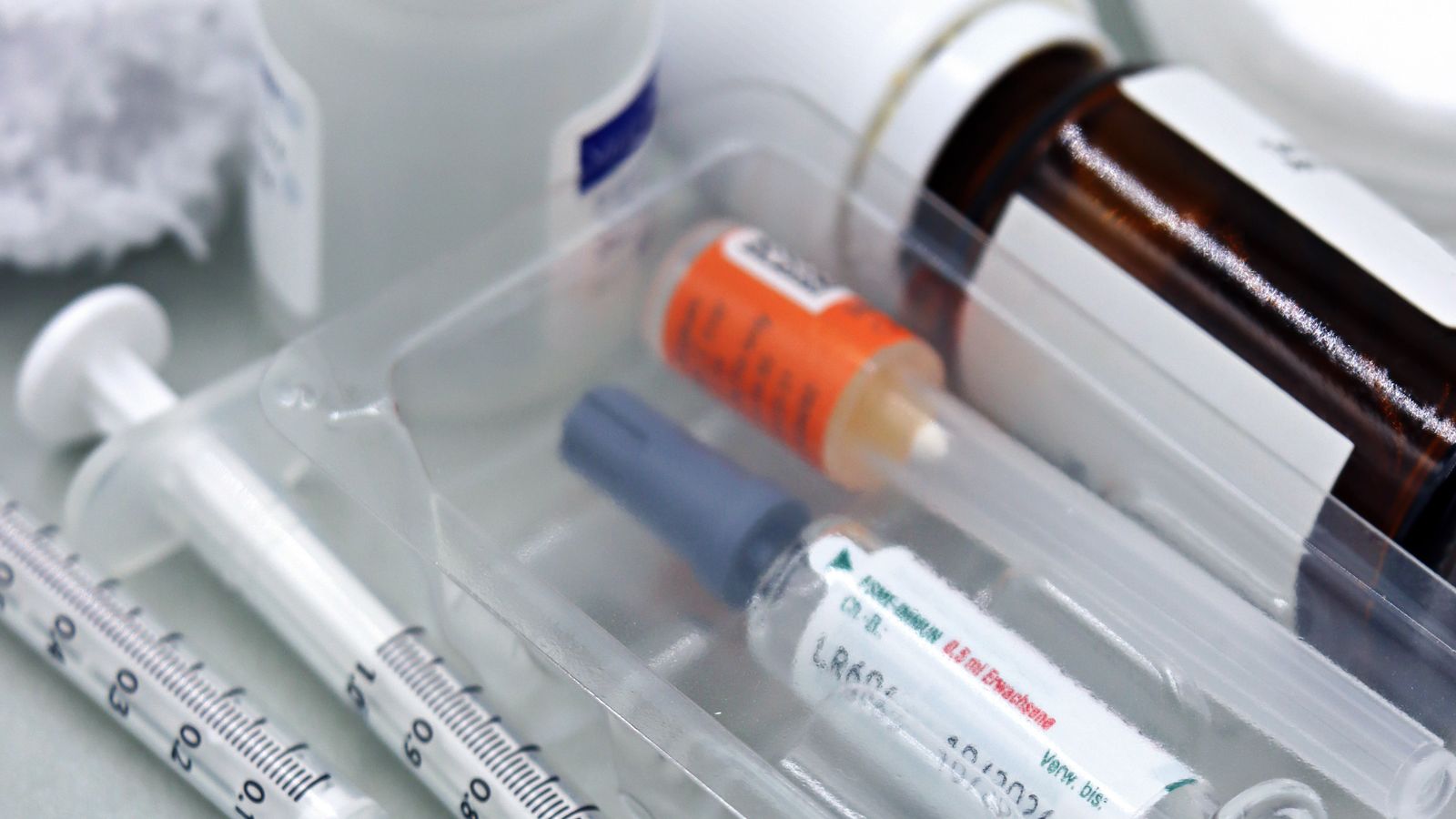
How Tesamorelin Listings Bundle Bacteriostatic Water Into Price
Many tesamorelin listings fold bacteriostatic water into the vial price rather than listing it separately, which affects how prices compare across sellers.
Reviewed by Robert Stern, PharmD, RPh, pharmacist and pharmaceutical researcher ·
Robert Stern, PharmD, RPh is a registered pharmacist with a research background in peptide hormones and GHRH analog formulation, with experience spanning hospital pharmacy and pharmaceutical research environments.
- tesamorelin
- pricing
- reconstitution
When a listing shows a single number next to a tesamorelin vial, that number often already includes a vial of bacteriostatic water, even though the water is never named separately. Some tesamorelin listings bundle bacteriostatic water into the quoted price as a default inclusion, and others charge for it as an add-on line item. The difference sounds small, but it changes what the sticker price is actually paying for, and it makes side-by-side comparisons misleading unless a buyer checks what’s included before comparing figures.
Why bundling happens
Bacteriostatic water is a low-cost item relative to a lyophilized peptide vial, so many suppliers fold it into the listed price rather than adding a second line to the checkout. From a catalogue-management standpoint, bundling simplifies the listing: one SKU, one price, one “add to cart” action. It also mirrors how research kits are commonly assembled, since a vial of peptide with no accompanying diluent is not directly usable for reconstitution without sourcing water elsewhere.
Bundling is not universal, though. Some listings sell the peptide vial alone and treat bacteriostatic water as an optional accessory, priced and listed separately. Neither approach is inherently more transparent, but they produce different headline numbers for what can otherwise look like the same tesamorelin vial.
What the quoted price is actually covering
A listing’s quoted price can represent any of the following, and the label alone rarely says which:
- The peptide vial only, with no diluent included
- The peptide vial plus one vial of bacteriostatic water, priced as a set
- The peptide vial plus multiple vials of bacteriostatic water, for buyers reconstituting more than once
- A “kit” that also includes ancillary items like alcohol swabs or syringes, priced as one unit
Because tesamorelin listings bundle bacteriostatic water into the quoted price inconsistently across sellers, a lower headline number does not automatically mean a lower total cost. A buyer comparing two listings needs to check whether both prices are being measured against the same set of included items before drawing a conclusion.
Reading the listing correctly
The product description or specifications section is usually where bundling is disclosed, if it’s disclosed at all. Look for phrasing that names bacteriostatic water directly, states a volume (commonly 2 mL, 3 mL, or 5 mL vials), or lists a quantity of diluent vials per order. If none of that appears anywhere on the page, the safest assumption is that the price covers the peptide vial alone, and diluent is sourced separately.
Some listings distinguish bundling status by SKU rather than by note: a “peptide only” SKU and a “peptide + water” SKU sit side by side at different prices for the same compound and vial size. When that structure is used, the price delta between the two SKUs is a reasonably clean way to isolate what the bundled water is actually adding to the cost, since everything else about the listing is held constant.
Working out the per-mL effect of bundled water
Bundling doesn’t change how much peptide is in the vial — it changes what volume of diluent a buyer is compensating the seller for, which in turn affects the concentration a given reconstitution produces. Concentration is calculated as the vial’s peptide mass divided by the volume of bacteriostatic water added:
concentration (mg/mL) = vial mg ÷ mL of bacteriostatic water added
Worked example: a 10 mg tesamorelin vial reconstituted with 2 mL of bacteriostatic water yields a concentration of 10 mg ÷ 2 mL = 5 mg/mL. The same 10 mg vial reconstituted with 5 mL instead yields 10 mg ÷ 5 mL = 2 mg/mL. Neither number is “more correct” — they describe two different dilutions of the identical vial. If a bundled listing includes a 2 mL water vial and a buyer wants a 5 mL dilution instead, they need to source the extra 3 mL of diluent separately, which is a cost the bundled price never accounted for. A reconstitution calculator such as peptcalc.com can be useful for checking concentration math like this against a specific vial size and target volume.
Comparing bundled and unbundled listings
The table below illustrates how the same underlying peptide cost can appear as different headline prices depending on what’s bundled, using illustrative figures rather than any specific vendor’s pricing.
| Listing structure | What’s included | What the price reflects |
|---|---|---|
| Peptide only | Vial of tesamorelin, no diluent | Lowest headline price; water sourced separately |
| Peptide + 1 water vial | Vial of tesamorelin, one bacteriostatic water vial | Mid-range price; covers one reconstitution volume |
| Peptide + multiple water vials | Vial of tesamorelin, two or more water vials | Highest headline price; covers repeat reconstitution without resourcing water |
| Kit pricing | Peptide, water, and ancillary supplies (swabs, syringes) | Highest total price; convenience bundle rather than a per-item breakdown |
Because tesamorelin listings bundle bacteriostatic water into the quoted price under any of these structures, the only reliable comparison is one normalized to the same included items — peptide-only price against peptide-only price, or full-kit price against full-kit price.
Purity and COA notes stay separate from bundling
Bundling status is a packaging and pricing decision, not a purity signal. A certificate of analysis (COA) describes the peptide vial’s tested content and should be available regardless of whether diluent ships alongside it. When comparing listings, it’s worth checking COA availability and bundling status as two separate questions rather than assuming one implies anything about the other. Buyers researching a broader catalogue rather than a single listing sometimes cross-reference how a wider supplier, such as the HEEZ Research shop, structures its own listings and documentation as a point of comparison.
Summary
Bundling bacteriostatic water into a tesamorelin listing’s quoted price is a common but inconsistent practice. Some sellers fold one or more water vials into the headline number, others price the peptide alone and treat diluent as an add-on, and the listing text is the only reliable way to tell which structure applies. Checking what volume of water is included, working out the resulting concentration, and normalizing prices to the same included items before comparing across sellers avoids treating a lower sticker price as a lower total cost when it may simply reflect less included in the box.