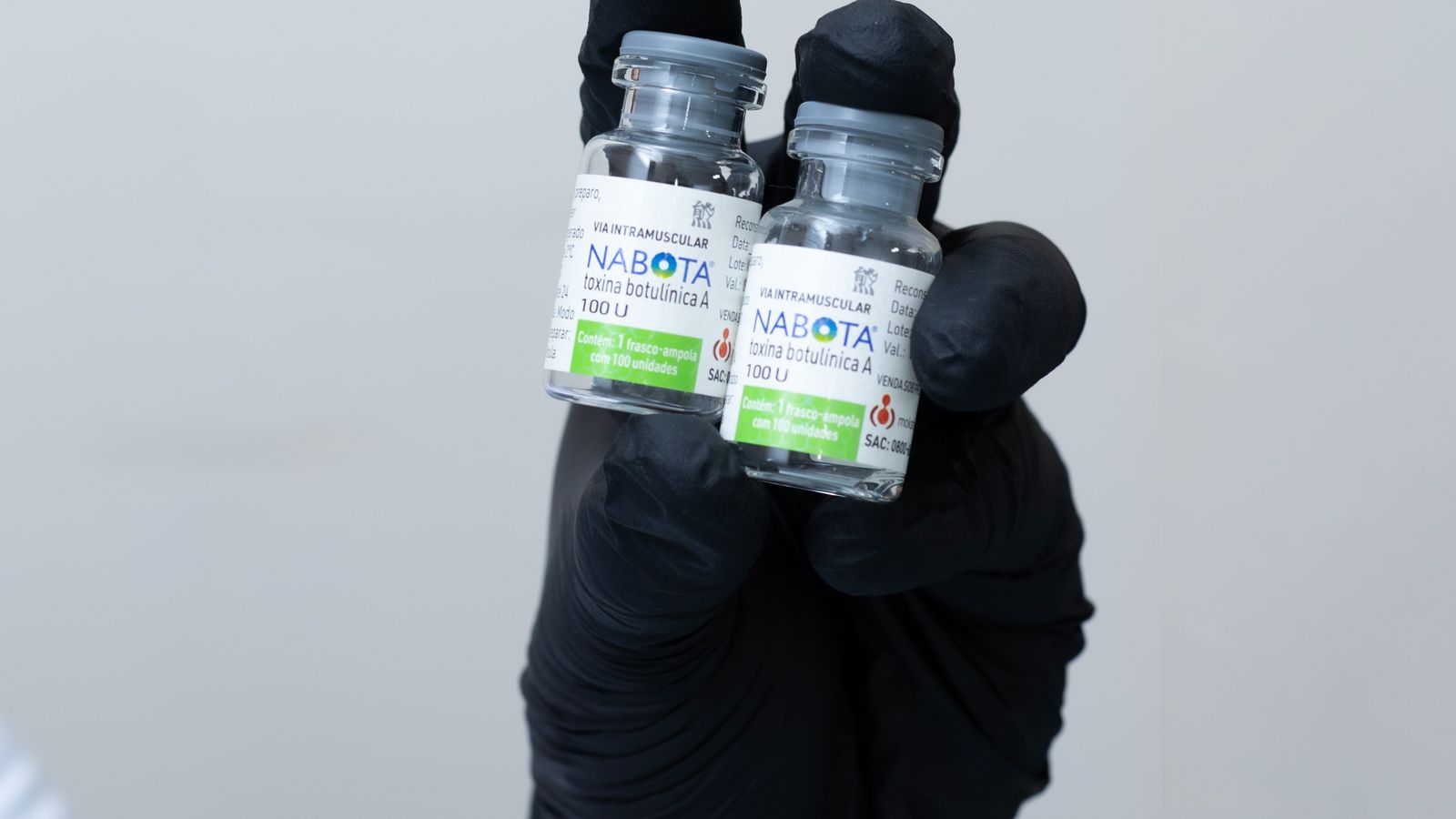
How to Compare Tesamorelin Listings by Price Per Mg
How to compare tesamorelin listings by price per mg: which inputs to normalize before dividing, and what the resulting figure does and doesn't show.
Reviewed by Robert Stern, PharmD, RPh, pharmacist and pharmaceutical researcher ·
Robert Stern, PharmD, RPh is a registered pharmacist with a research background in peptide hormones and GHRH analog formulation, with experience spanning hospital pharmacy and pharmaceutical research environments.
- tesamorelin
- pricing
- comparison
Comparing tesamorelin listings by price per mg means reducing every listing to the same unit — total price divided by labeled milligram content — before looking at how the numbers stack up against each other. Skipping that step and comparing sticker prices directly is the single most common way a comparison goes wrong, because vial sizes are not standardized across sellers and a lower price can just mean a smaller vial.
The method itself is simple arithmetic. What makes it reliable is doing the normalization consistently across every listing in the comparison, not just computing the number once and trusting it.
Step One: Confirm What the Mg Figure Represents
Before any division happens, the labeled mg content needs to mean the same thing on every listing being compared. A single-vial listing states its content plainly: a vial labeled 5 mg contains 5 mg. A multi-vial bundle is different — a listing advertising “3 vials, 15 mg total” for one price is not comparable to a single 5 mg vial unless the bundle price is first divided down to a per-vial basis.
This step catches more errors than the arithmetic that follows it. A bundle total mistaken for a single-vial content figure produces a per-mg number that looks precise but describes something other than what it claims to.
Step Two: Confirm What the Price Figure Includes
The second input, listed price, needs the same scrutiny. Some listings display a price that already includes shipping; others add shipping at checkout, so the number on the product page understates what actually gets paid. Comparing a shipping-inclusive price on one listing against a shipping-exclusive price on another produces a per-mg figure that is internally consistent for neither listing.
The fix is not complicated: pick one convention — price before shipping, or price after — and apply it to every listing in the comparison. Which convention is chosen matters less than applying it uniformly.
Step Three: Divide, Then Compare
Once both inputs are normalized, the formula is:
price per mg = total listed price ÷ mg labeled on the vial
Worked example: a listing prices a 5 mg tesamorelin vial at $85. Dividing $85 by 5 mg gives $17.00 per mg. A second listing prices a 10 mg vial at $150. Dividing $150 by 10 mg gives $15.00 per mg. Checking both a second time: 85 ÷ 5 is 17, and 150 ÷ 10 is 15. The 10 mg listing carries the higher sticker price but the lower price per mg, which only becomes visible after both figures are calculated the same way.
| Listing | Vial size | Listed price | Price per mg |
|---|---|---|---|
| A | 5 mg | $85 | $17.00 |
| B | 10 mg | $150 | $15.00 |
| C | 2 mg | $42 | $21.00 |
Read as a sticker-price ranking, Listing C looks cheapest and Listing B looks most expensive. Read as a price-per-mg ranking, the order reverses at the top: Listing B is the lowest per-mg cost of the three, and Listing C is the highest. Only the normalized column answers the question a comparison is actually trying to answer.
Why Larger Vials Often — Not Always — Price Lower Per Mg
A pattern shows up often enough across tesamorelin listings that it is worth naming: larger vials tend to carry a lower per-mg cost than smaller vials from the same seller, in line with common bulk-pricing structures. But “tends to” is doing real work in that sentence. It is not a rule, and treating it as one skips the actual calculation in favor of an assumption. The only way to know whether a given listing follows that pattern is to run the division on that specific listing rather than extrapolate from what similar listings have shown elsewhere.
Other Variables That Shift the Comparison
Price per mg is the cleanest single number for comparing listings, but a few other factors explain why two listings with an identical per-mg figure are not always equivalent:
- Purity and testing claims. A listing citing third-party testing or a specific purity threshold is not describing the same product as one that makes no such claim, even if the price-per-mg figures match.
- Vial count per order. A per-mg figure calculated from a bundle needs the bundle price divided across every vial in it, not just the total price divided by the total labeled mg, if vial sizes within the bundle differ.
- Currency and regional pricing. Listings priced in different currencies need conversion to a common currency before the per-mg comparison means anything.
None of these change the arithmetic in Step Three. They change what a matching or near-matching per-mg number actually signifies once it has been calculated.
Price Per Mg Is a Cost Figure, Not a Concentration Figure
These two numbers get confused because both involve dividing a mg figure by something else, but they answer different questions. Price per mg describes cost: what a listing charges for each labeled milligram, before anything happens to the vial. Concentration describes dilution after reconstitution: how many milligrams end up in each milliliter of liquid once bacteriostatic water is added, calculated as concentration = vial mg ÷ mL of water added.
A vial’s price per mg does not change when it is reconstituted — that figure was fixed the moment the listing set its price. Concentration only comes into play afterward, when the same labeled mg amount gets distributed across a chosen volume of diluent. Comparing tesamorelin listings by price per mg is a purchasing question; concentration is a preparation question, and the two should not be substituted for each other. For anyone running the reconstitution math separately, a calculator such as peptcalc.com is a reasonable way to cross-check concentration figures once vial size and diluent volume are set.
A Repeatable Checklist
The same sequence applies to any set of tesamorelin listings:
- Confirm the mg figure per listing reflects a single vial, not an unallocated bundle total.
- Confirm every price figure in the set either includes or excludes shipping — pick one and apply it across the board.
- Divide price by mg for each listing.
- Compare the resulting per-mg figures, not the original sticker prices.
- Note any difference in purity claims or testing documentation separately, since the per-mg number alone does not capture it.
Skipping any one of these steps does not necessarily produce a wrong number — it produces a number that answers a slightly different question than the one being asked, which is harder to catch after the fact. For readers weighing how a given batch is documented before comparing prices at all, the tesamorelin product listing lays out the same vial-size and labeling terms this comparison method assumes as inputs.
Summary
Comparing tesamorelin listings by price per mg means normalizing two inputs — labeled mg content and listed price — to the same basis before dividing, and applying that same normalization to every listing in the set. The resulting figure can reorder listings that looked ranked correctly by sticker price alone, particularly when vial sizes differ. Price per mg is a cost calculation, separate from concentration, and it is only as reliable as the two numbers that go into it.